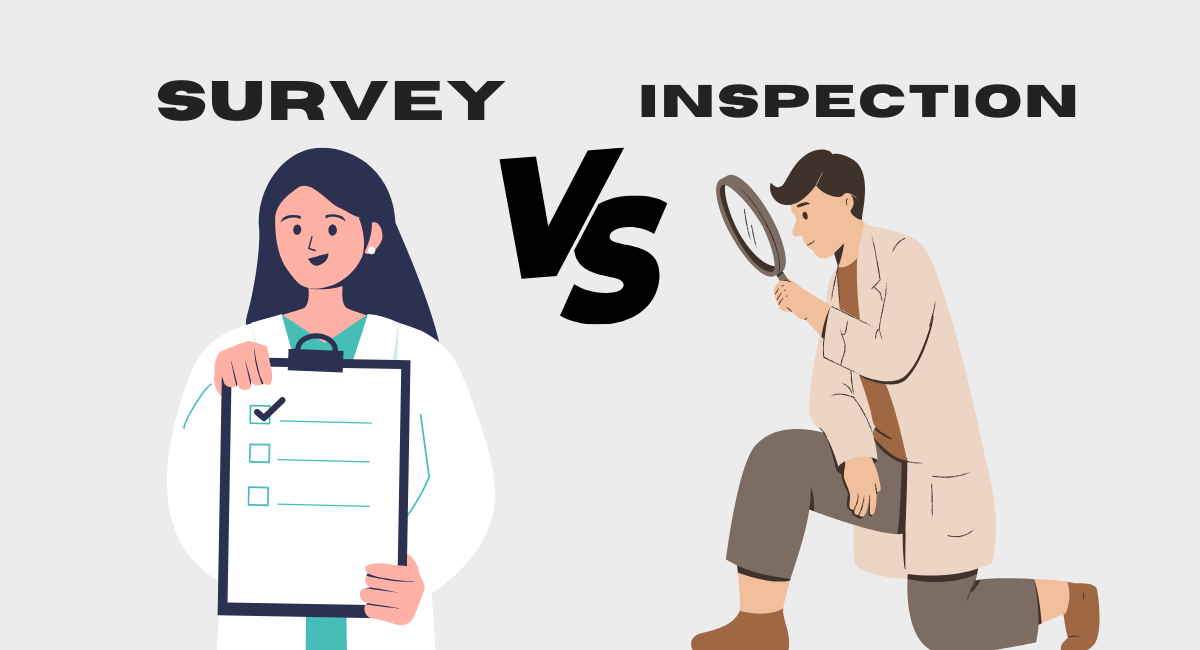
In the world of assisted living and long-term care, two terms are often used interchangeably: survey and inspection. Both surveys and inspections involve oversight and regulatory review. However, they’re not exactly the same thing. Understanding the difference between the two can help providers stay better prepared, more compliant, and less stressed when that official visit happens.
In this post, we’ll break down the key differences, similarities, real-world examples, and what your team can expect from each.
What Is a Survey?
A survey is a formal regulatory review conducted by your state’s licensing or health agency. It typically occurs on an annual or biennial basis, often unannounced, and is comprehensive in nature. Surveyors assess your facility’s compliance with a wide range of regulations covering:
- Resident care and safety
- Staff training and credentials
- Medication administration
- Documentation and record-keeping
- Infection control
- Resident rights
Key traits of a survey:
- Conducted by state or regional agency (e.g. DHS, HHSC)
- Required for license renewal and ongoing certification
- Includes interviews, documentation review, and direct observation
- May last multiple days depending on facility size
Outcome: Surveys typically result in a written report of findings, potential deficiencies, and a required plan of correction if needed.
Example: In Oregon, Adult Foster Homes receive a full survey every two years by the Department of Human Services. The survey includes a comprehensive review of medication logs, ADL documentation, and interviews with both residents and staff. Facilities must submit a Plan of Correction (POC) for any deficiencies found. [Source: Oregon DHS Licensing Rules – OAR 411-049]
Want to be prepared for your next survey? Check out our blog with The Top 5 Tips to Be Ready
What Is an Inspection?
An inspection is a broader term and can refer to many types of evaluations, some of which are regulatory, and others that are operational or safety-related.
Inspections may be:
- Targeted: Following up on a complaint or reported incident
- Focused: On specific areas like fire safety, kitchen sanitation, or medication storage
- Unscheduled or scheduled depending on the type and purpose
- Conducted by different authorities (e.g. fire marshal, health inspector, or state ombudsman)
Key traits of an inspection:
- Not always comprehensive or tied to licensing
- Often reactive or specialized in scope
- May happen in addition to regular surveys
Example: In Texas, the Health and Human Services Commission (HHSC) may send an inspector within 24 hours of receiving a complaint regarding improper medication storage. This inspection may only review that specific process and lead to immediate correction orders. [Source: Texas Administrative Code, Title 26, Part 1, Chapter 553]
Survey vs Inspection Key Differences
| Feature | Survey | Inspection |
|---|---|---|
| Scope | Broad and comprehensive | Specific or targeted |
| Conducted by | State licensing agency | Multiple possible agencies |
| Purpose | Regulatory compliance | Safety, complaint follow-up, or audits |
| Frequency | Annual or biennial | As needed |
| Outcome | Deficiency report & plan of correction | Varies: may be informal or formal action |
Why the Confusion?
For example, many care providers, staff, and even state materials use “inspection” and “survey” interchangeably. In particular, this happens when describing an official regulatory visit. In most cases, a survey is a type of inspection. However, not all inspections are surveys.
Therefore, it is important to understand the nuance. As a result, you can be better prepared for either one.
How to Stay Ready for Both
Regardless of whether it’s a survey or inspection, preparation is your best defense. Here’s how Synkwise can help:
- Centralized Documentation for Compliance: Store resident care notes, staff credentials, and incident reports in a secure, searchable system that’s ready when surveyors or inspectors arrive.
(PS: Synkwise is the best option for streamlined documentation) - Task Management: Ensure nothing slips through the cracks and no compliance task is missed.
- Real-Time Recordkeeping: Eliminate delays and outdated paperwork with synced data entry across devices.
Real-World Tip: For instance, regular internal audits and mock surveys are a great way to prepare for inspections. Moreover, they help reduce the risk of deficiencies. In addition, the National Center for Assisted Living (NCAL) provides a helpful guide for survey preparedness. It recommends that facilities conduct mock surveys and internal reviews. These reviews help identify gaps before official visits. You can view this here.
{Source: National Center for Assisted Living (NCAL)}
Final Thoughts
In the end, whether it’s a scheduled inspection or your annual survey, your goal is the same; deliver high-quality care while maintaining compliance. Understanding the difference between surveys and inspections empowers your team to meet both confidently.
Need help getting your team organized before your next visit?
Schedule a Demo with Synkwise Today!
Sources:
- Oregon Department of Human Services (OAR 411-049) – https://www.oregon.gov/dhs
- Texas Administrative Code, Title 26 – https://www.sos.state.tx.us/tac
- National Center for Assisted Living (NCAL) – Survey Preparedness Guide – https://www.ahcancal.org/Assisted-Living/Provider-Resources/Documents/NCAL%20Survey%20Preparedness.pdf